
At Pro Impressions Marketing, our approach to dental website design connects branding, patient experience, search visibility, persuasive content, and conversion strategy. The result is a website that reflects the quality of your practice while helping more of the right patients find you and request appointments.
What Is Dental Website Design?
Dental website design is the strategic planning, visual design, content, user experience, and technical development of a website specifically for a dental practice. Effective design considers how patients search for care, evaluate dentists, compare treatment options, and decide whether to contact an office.
That means a successful dental website needs to do more than look polished. It should support your brand, make important information easy to find, clearly communicate treatment, perform well on mobile devices, enhance search visibility, and guide patients toward an appropriate next step.


How to Compare the Best Dental Website Companies
The best dental website companies should understand more than graphic design. They should understand dentistry, patient decision making, search marketing, content strategy, conversion, and the business goals behind the website.
When comparing dental website companies, look closely at how each agency approaches strategy. A strong partner should be able to explain how the website will support the services you want to grow, how content will match patient search intent, how performance will be measured, and what happens after the site launches.


You should also review the agency’s work across different practice types. Look for variety rather than the same layout repeated with different colors and logos.
Ask who handles strategy, copy, search optimization, design, technical development, and ongoing support. If those pieces operate independently, the website may look attractive, but not support the rest of your marketing.
At Pro Impressions Marketing, website strategy is directly connected to dental SEO, reputation, advertising, content, and patient conversion. That coordination matters because your website rarely works in isolation.
What a High-Performing Dental Website Includes
A strong dental website combines design, content, technology, and marketing strategy. Each element should make the experience easier for patients while supporting the goals of the practice.
Important components can include:

Fully Custom Design
- Original design aligned with your practice identity
- Clear navigation and treatment organization
- Authentic practice photography and visual content

Mobile-Friendly & Responsive
- Fast page performance
- Clear calls to action and appointment pathways
- Mobile responsive layouts

Built-In SEO
- Dental SEO integrated from the beginning
- Doctor and team information that strengthens credibility
- Persuasive, patient friendly copy

Conversion-Driven Layouts
- Secure patient form integrations
- Accessibility focused design practices
- Analytics and ongoing performance monitoring
These elements should work together rather than appearing as disconnected features. A beautiful homepage cannot compensate for confusing navigation, weak treatment pages, or an appointment process that creates unnecessary friction.
How Dental Website Design Supports SEO and Visibility
Search visibility begins with more than keywords. A website needs a clear structure that helps search engines understand the practice, its services, and the geographic markets it serves.
Thoughtful dental website design supports SEO through logical navigation, organized service pages, internal linking, mobile usability, page performance, and content that answers the questions prospective patients are actually asking.
Our SEO team works alongside strategy, content, and design so search considerations are part of the website from the beginning rather than added after the fact.
That coordination also gives practices room to expand their visibility over time. New services, educational articles, location content, and other search opportunities can fit naturally into an organized site instead of becoming disconnected additions.

Website Design and Your Online Reputation
A patient who finds strong reviews may visit your website next. The experience they find there should reinforce the confidence those reviews created. Professional design, accurate information, authentic photography, doctor credentials, patient testimonials, and consistent branding can all strengthen that impression. A website that feels outdated or difficult to navigate can create doubt even when the practice has an excellent reputation elsewhere.
Our dental reputation management services help practices create greater consistency between what patients hear from others and what they experience across the rest of the practice’s online presence.
Social media plays a similar role. Reviews tell prospective patients what others experienced, while dental social media marketing offers another way to see the people and personalities behind the practice.


See What Strategic Website Design Can Do
A portfolio can show you whether an agency produces attractive work. Results tell you whether that work supports the practice.
Our dental marketing case studies show how website strategy works alongside SEO, content, advertising, reputation, and other marketing efforts. We look at the broader patient acquisition system rather than treating the website as a standalone project.
That is also why every practice should be evaluated individually. The right design decisions depend on where the practice is today, the patients it wants to reach, and the services it wants to grow.

Dr. Haddad – Sleep Apnea & TMJ Dentist
Southside, Michigan

When Should a Dentist Redesign a Website?
A dental practice should consider a redesign when the current website no longer supports the patient experience or the practice’s goals. Age alone is not the best measure.
A redesign may make sense if the site performs poorly on mobile devices, loads slowly, no longer reflects the brand, makes important information difficult to find, or cannot support current search and marketing strategies. Changes in practice can also create a need for a new approach. Adding doctors, opening locations, shifting toward higher value services, repositioning the brand, or changing the types of patients you want to attract may require a different website strategy.
Website Design & Development FAQs
Dentists often have questions about how website design connects with search visibility, patient experience, scheduling, and long-term marketing. These answers cover several of the considerations that matter most when choosing a website partner.
Website Design & Development
Related Articles
Curious what goes into a high-performing dental website? Our articles pull back the curtain on the strategies we use every day—SEO-friendly design, mobile responsiveness, and user experience that converts. Explore our insights to see how we think—and how we’ll put those strategies to work for your practice.

Dental Marketing Mistakes That Hurt Practice Growth
Pro Impressions Marketing is the agency that dentists rely on for their full-service marketing needs. We understand that sustainable practice growth does not happen [...]
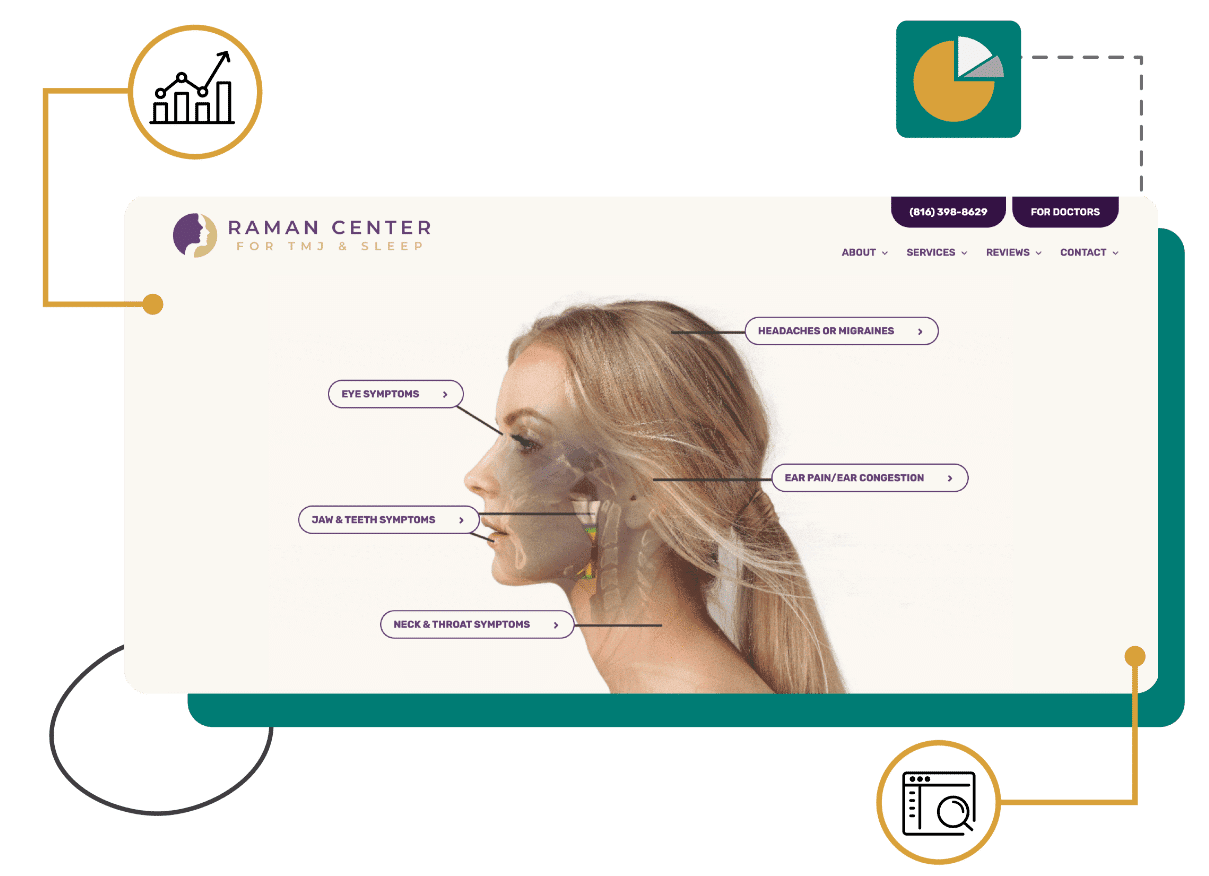
The Complete Guide to Dental Website Design
A dental website is not just digital decor for your practice. Instead, it works as a patient-acquisition engine that runs around the clock to [...]

Dental Marketing That Attracts, Converts, and Grows Practices
Marketing is one of the most powerful tools for growing your dental practice and attracting the right patients. While your clinical skills create beautiful, [...]
Marketing Mistakes High-End Dental Practices Can’t Afford To Make
High-end dental practices thrive on reputation, results, and relationships. When you’re delivering complex, life-changing dentistry—like full-arch restorations, implants, and cosmetic transformations—your marketing has to [...]

How Dental Marketing ROI Is Measured, Reported, and Improved
Most dental practices don’t suffer from a lack of marketing, they suffer from inefficient marketing. If you are investing consistently but not seeing a [...]

High-Converting Dental Websites Drive Real Growth
Having a visually appealing website is great. However, if it does not consistently bring new patients into your dental office, it is not doing its [...]
Why Dentists Struggle with Marketing (and How Pro Impressions Can Fix It)
Many dentists know their {{{{link id='50501' text='online presence' esc_html='false'}}}} isn't where it should be. You're not getting enough of the right patients, your marketing [...]

Building Patient Trust Through Consistent Branding: A Guide for TMJ and Sleep Dentists
Trust is the foundation of every successful dental practice, especially in specialized fields like TMJ and sleep dentistry. Patients seeking relief from chronic jaw [...]

The Best Dental Website Features to Attract and Retain Patients
Many dentists try to save money with DIY website builders or cheap, cookie-cutter templates. They treat their website like a static digital brochure. While [...]