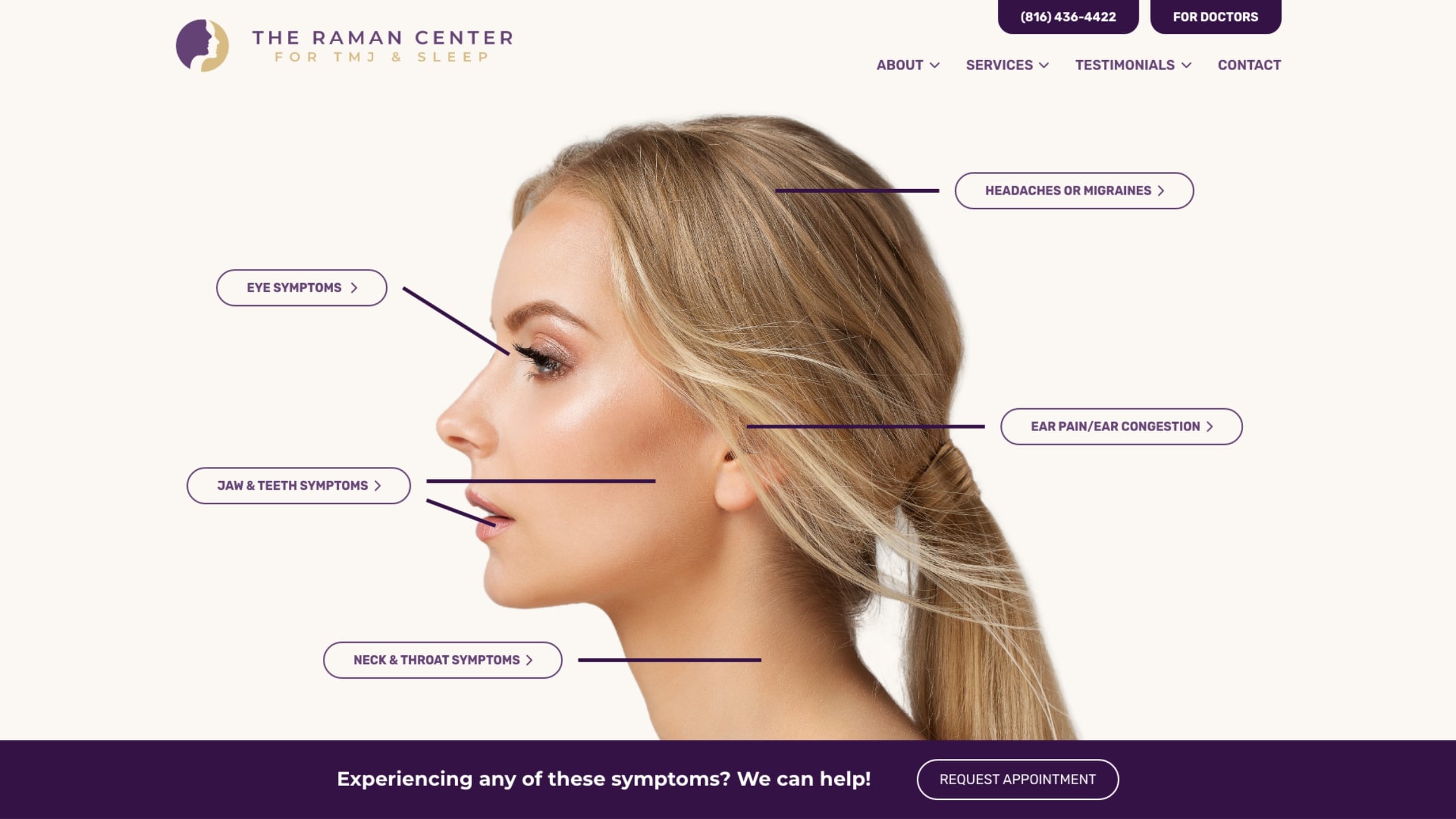
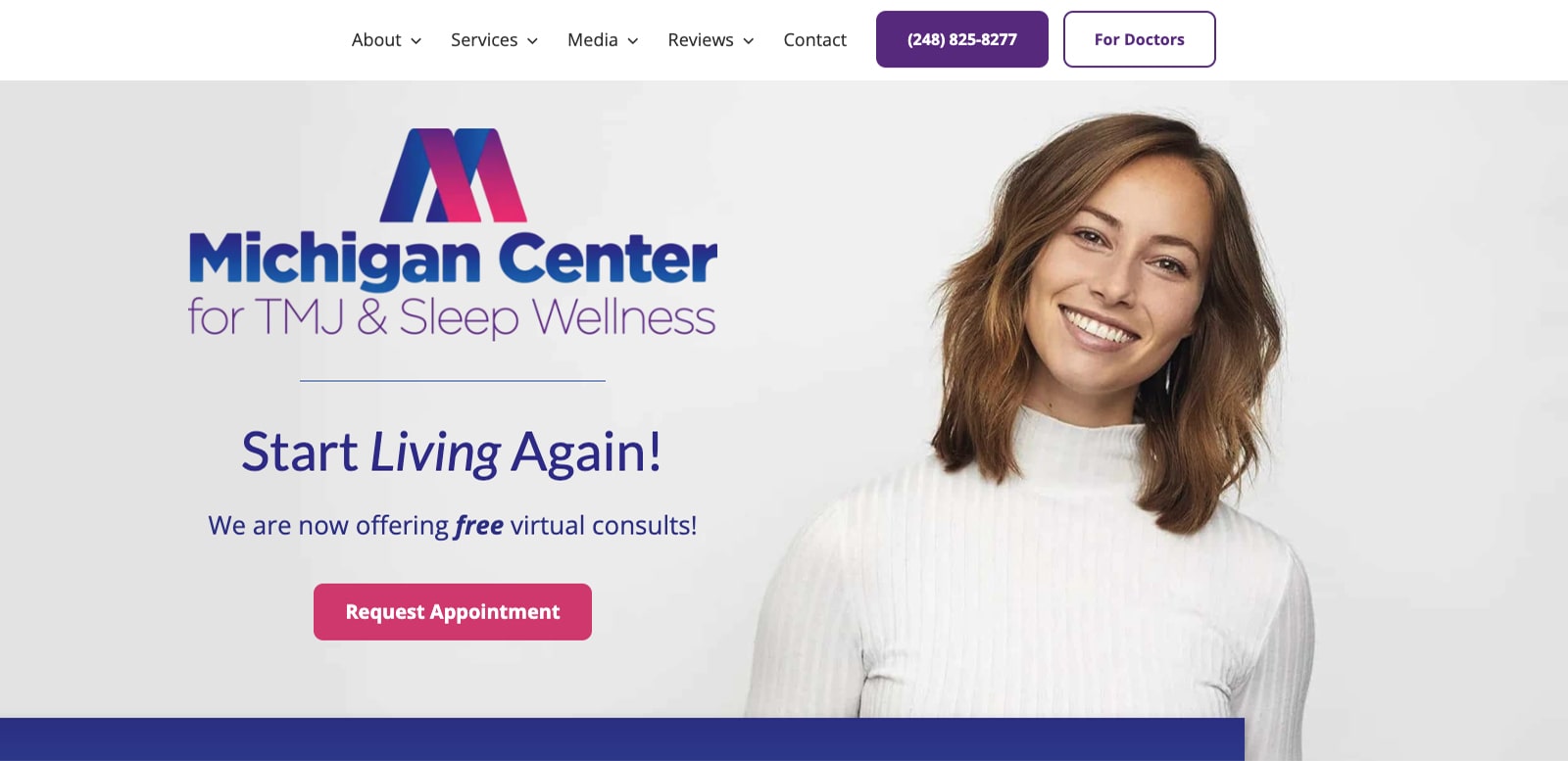
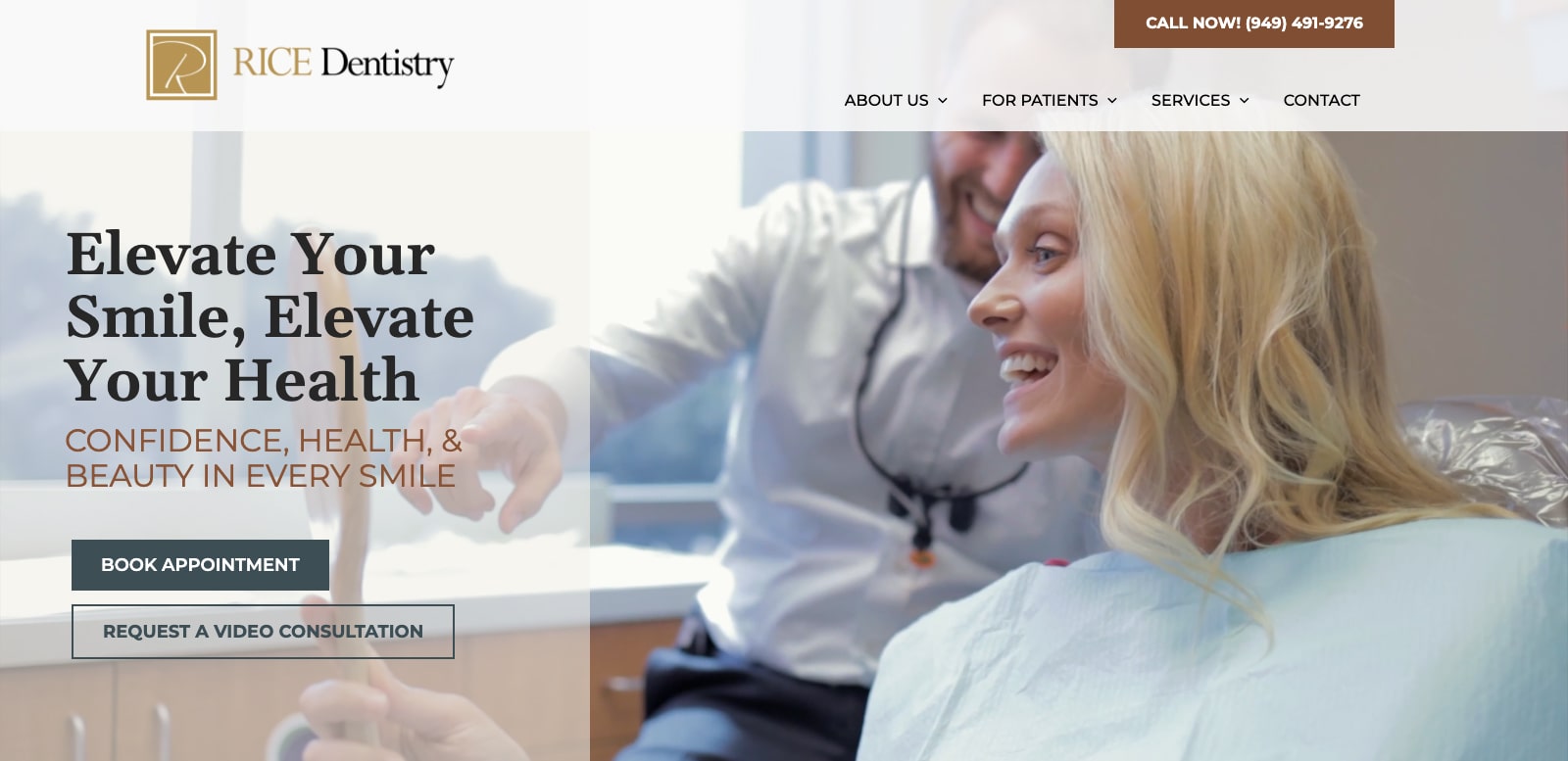
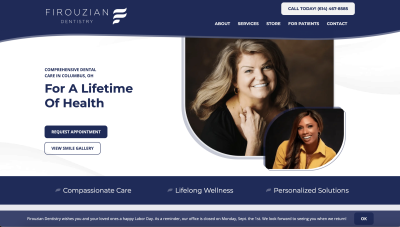
A dental website is not just digital decor for your practice. Instead, it works as a patient-acquisition engine that runs around the clock to showcase your clinical excellence. First impressions matter in dentistry. A polished website builds the trust and credibility needed to grow your patient base.
Today, patients often judge your clinical standards by the quality of your website long before they ever sit in your chair. For example, if your site looks outdated or difficult to navigate, prospective patients may assume your dental technology is outdated as well. As a result, a modern design reassures them they are making the right choice for their oral health.
Our dental marketing agency focuses on building a digital presence that reflects the high-quality care you provide. Most importantly, a successful online strategy requires a balance of visual appeal, technical performance, and patient-focused messaging. This combination helps your office stand apart from the competition.
What Dentists Should Expect From A Professional Website
Most importantly, your online presence needs to work hard for your practice by combining visual appeal with technical performance. When you invest in professional dental website design, you ensure your site serves as a seamless and secure extension of your physical office.
- Mobile-first design is an absolute necessity because the majority of your prospective patients are searching for a new dentist on their smartphones. A responsive design ensures your site looks and functions perfectly on smaller screens without frustrating layout shifts, making it easy for users to tap buttons and read text without zooming in.
- User-friendly navigation prevents confusing layouts that cost you new patients every single day. We organize your website to guide visitors directly to your core services, team biographies, and contact information, ensuring they can find exactly what they need in two clicks or less.
- Conversion optimization transforms casual website traffic into actual booked appointments for your practice. We focus on placing clear calls to action in strategic locations throughout the page, naturally guiding the patient’s eye toward scheduling a visit with your team.
- Strict SEO compliance ensures that search engines can easily read and rank your website so local patients can actually find you. This involves optimizing site architecture, improving load times, and writing clean metadata that quietly works behind the scenes to boost your visibility.
- HIPAA and security considerations protect sensitive patient data and keep your digital presence fully compliant with modern healthcare regulations. Secure contact forms, encrypted hosting, and strict privacy protocols are non-negotiable elements for any medical professional’s website.
Why Do-It-Yourself Website Tips Do Not Work In Practice
 Trying to build your own site using generic advice often leads to a frustrating user experience for your prospective patients. A patched-together approach usually misses the critical structural elements needed to stand out in a highly competitive dental market.
- Generic website templates completely fail to capture the unique culture, expert team, and high standards of your specific dental branding. When your digital footprint looks exactly like every other dentist in town, prospective patients have no compelling reason to choose you over the clinic down the street.
- Vital SEO and conversion elements are often missing entirely or implemented in ways that actively hurt your search rankings. Do-it-yourself website builders are notorious for hiding or ignoring technical optimization needs, which means you lose out on valuable local traffic month after month.
- Inconsistent branding and trust signals across different pages can cause potential patients to hesitate and leave your site. Trust is the single most important factor in a patient’s decision to select a healthcare provider, and you need cohesive colors, professional photography, and integrated reviews to build instant credibility.
How Our Team Designs Websites That Perform
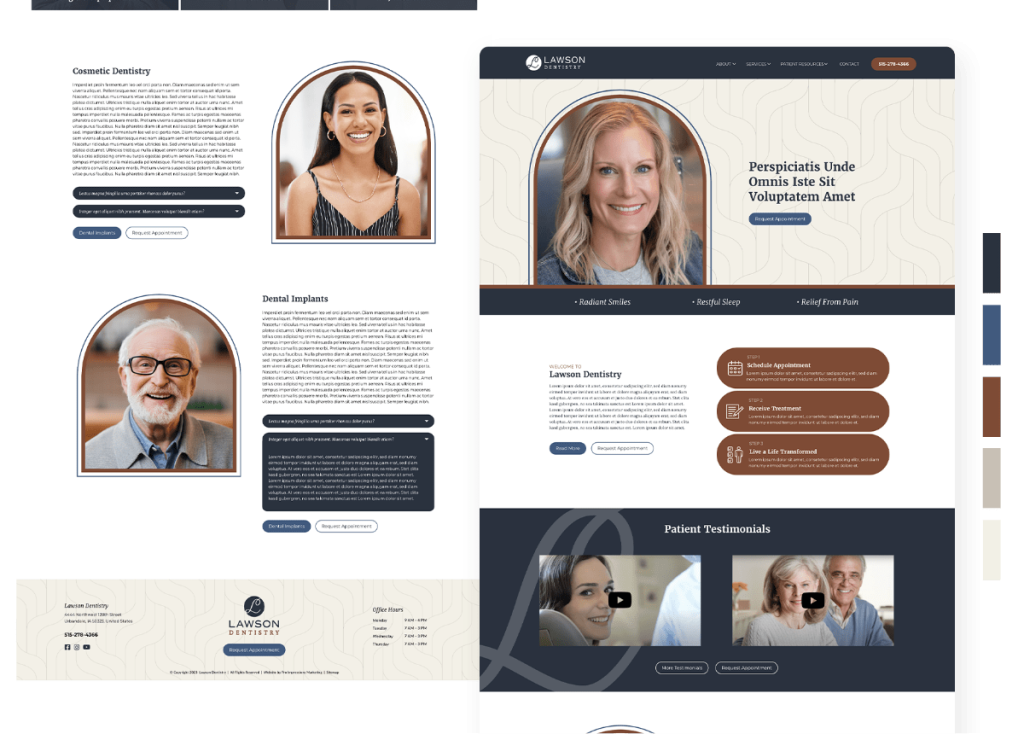 We take a comprehensive approach to ensure your new website accurately reflects the exceptional quality of clinical care you provide every day. Our goal is to build a digital asset that actively supports your business goals and attracts high-value cases.
A Focus On Design And Dental Branding
Our team is highly experienced in design, SEO and copywriting, and analytics. Instead of guessing what works, we use hard data to inform every layout choice and color palette we present to your practice. We ensure your office stands out as the premier choice in your local market by highlighting your unique approach to patient care.
Real Case Examples Of Results-Driven Redesigns
The proof is always in the data and in the increased production we deliver to our clients. By reviewing our case examples of results-driven redesigns, you can see exactly how a strategic digital overhaul increases patient flow and practice revenue. We build custom websites from the ground up to attract, engage, and convert the exact types of patients you want in your chair.
Frequently Asked Questions About Dental Website Design
Dentists often have similar questions when considering a digital marketing overhaul for their practice. Here are some of the most common inquiries we receive about our custom design process and timeline.
Stop Worrying About Checklists And Start Growing Your Practice
You went to dental school to care for patients, not to manage server settings and search engine rankings. Let our team handle the technical details of your online marketing so you can focus entirely on clinical excellence and patient experience. We are ready to help you build a patient acquisition engine that serves your business for years to come. Schedule your strategy call to get started today.